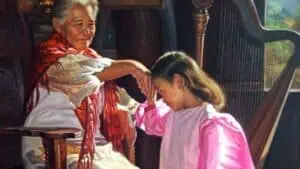
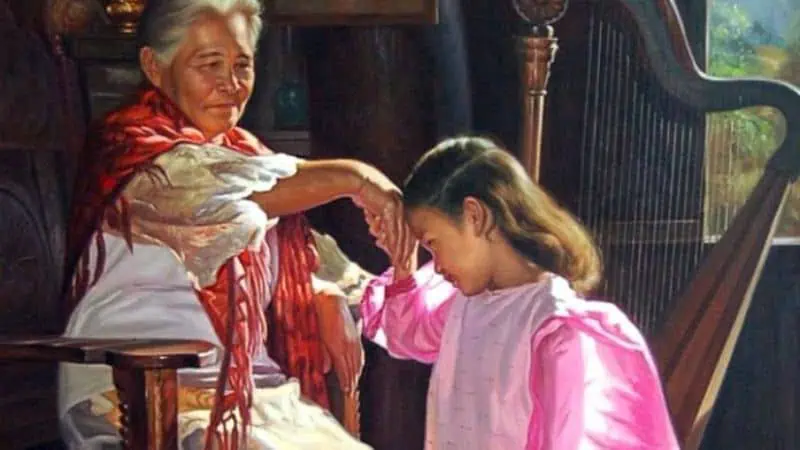
Filipino cultural beliefs are the invisible rules behind many of the things we do without stopping to explain why. They appear in meetings, at the dinner table, in the way we receive visitors, in how we speak to elders, in what parents expect from children, and even in the way we sometimes say yes when what we really mean is, I find it difficult to say no.
You can see these beliefs in small moments. Someone insists that a visitor eat before leaving. A working child sends part of every paycheck home. A colleague hesitates to disagree publicly with the boss. Neighbors begin helping after a disaster before anyone assigns them a role. Someone says bahala na after doing everything that can reasonably be done.
These behaviors are connected to Filipino values, but cultural beliefs and values are not exactly the same thing. I find it useful to make a practical distinction: cultural beliefs influence how we think life and relationships work; values tell us what we consider important enough to protect or pursue; behavior is what other people eventually see us do.
If you are looking for the values themselves, I have gathered them in 31 Filipino Values and How to Put Them Into Practice. This page goes underneath that list. I want to explore the beliefs that help explain why values such as bayanihan, pakikipagkapwa-tao, malasakit, pakikisama, diskarte, utang na loob, delicadeza, and bahala na make sense to many Filipinos.
What Are Filipino Cultural Beliefs?
A cultural belief is an idea about how life works that becomes familiar enough that people may stop noticing it as a belief.
We learn, for example, that family matters when we watch adults rearrange their lives for children, parents, siblings, and relatives. We learn something about respect when we hear po and opo, watch people use Ate, Kuya, Tito, and Tita even outside the biological family, or notice how differently a correction feels when it is given privately instead of in front of everyone.
Nobody needs to gather the children and announce, “Today, we will study cultural beliefs.” Culture is usually learned while life is happening.
We hear sayings. We watch what gets praised. We notice what brings embarrassment. We learn which obligations can be postponed and which ones everybody expects us to honor. We discover what people mean when they say, Hindi tama iyan, even when nobody has violated a written rule.
This is one reason cultural beliefs can be difficult to explain. We are often swimming in them before we learn the words for them. Parents, grandparents, teachers, neighbors, religion, stories, celebrations, work, and everyday experience all help teach us what our community believes matters.
And because Filipinos come from different regions, languages, faith traditions, generations, classes, and family histories, there is no single script every Filipino follows. Some beliefs are widely recognizable, but their meaning and strength still vary from person to person and community to community.
The useful question, then, is not, “Do all Filipinos believe this?”
It is, “What familiar belief might help explain why this behavior makes sense here?”
We Learn What Matters Before We Can Define It
When I was in college, students often went to a particular store near us. We called the owner Mister Salamat, although Salamat was not his surname.
He earned that name because he thanked everyone. You could enter his store, look around, stay for a while, and buy nothing. He would still thank you for visiting. If you bought food or school supplies, he thanked you again.
Students liked him, and they kept coming back.
I do not remember anyone giving us a lecture about magpasalamat before we understood what was happening. We saw gratitude practiced, and then something interesting happened: people reciprocated.
This is one way beliefs become values. Somewhere underneath the behavior is an assumption about relationships: people are not merely transactions. How we make them feel matters. Kindness creates something between people. Gratitude deserves an answer.
That does not mean every act of kindness should create a debt. In fact, Utang na Loob becomes unhealthy when gratitude is turned into a permanent obligation another person can collect at will. But it helps us understand why reciprocity carries such emotional weight in Filipino relationships.
This is what makes cultural beliefs worth studying. They help us see the story underneath the behavior.
We Carry Our Dignity With Us
One familiar Filipino belief is that a person carries a dignity that should not be casually damaged.
You can see it in our concern for dangal, reputation, respect, and the way a person is treated in front of others. It helps explain why a correction delivered privately can be received very differently from the same correction delivered as public humiliation.
This belief connects several Filipino values. Amor proprio concerns self-respect. Karangalan concerns honor. Magalang asks us to make respect visible in the way we deal with other people. Delicadeza adds another dimension: sometimes dignity is protected by knowing that something may be technically possible but still inappropriate, compromising, or unworthy of the role we hold.
That matters at work. A leader may think, I only told the truth. But truth and humiliation are not the same thing. If an employee made a mistake, the leader can still insist on accountability without turning correction into a public performance.
It matters in families too. Respect for parents does not require children to pretend their parents are always right. Respect can change the manner in which disagreement happens without eliminating the disagreement itself.
The cultural belief is not simply avoid embarrassment. At its stronger expression, it says: people have dignity; treat that dignity as something worth protecting.
Discover the Filipino values that shape how we work, lead, and live—beyond slogans and speeches. Get the Values Starter Kit. Read the series, choose one value to practice this week, and watch how small shifts create real change.
We Carry the Family With Us
In highly individualistic stories, the hero leaves home, discovers who they really are, makes independent choices, and builds a life according to personal ambition.
Many Filipino stories are more complicated.
A student wants to finish college not only because a degree will create opportunities, but because para kina Mama at Papa ito. A parent works abroad because what happens to the children matters more than the inconvenience of separation. A professional may turn down an opportunity because an aging parent needs care.
This does not mean Filipinos have no personal dreams. It means that personal decisions are often understood in relation to other people.
Education, overseas work, employment, caregiving, and sacrifice can therefore become family decisions rather than purely individual ones. That worldview can produce remarkable sacrifice. Parents postpone their own wants so their children can study. Older siblings help younger siblings finish school. Relatives absorb one another’s emergencies. Success becomes sweeter because more than one person benefits from it.
But every cultural belief also deserves examination.
When does helping family become enabling? When does responsibility become control? When does pamilya muna make it difficult for an adult child to build healthy boundaries? When does loyalty to relatives enter a decision that should instead be based on fairness?
The value is not automatically wrong because it creates tension. The tension is exactly where we need judgment.
We See Ourselves Through Kapwa
When I was young, one television program I remember was Kapwa Ko, Mahal Ko. People in need received help, and viewers contributed too. The title itself stayed with people because the word kapwa carries more than the ordinary idea of another person.
I prefer to think of kapwa as an other-self: another human being with dignity equal to mine.
That way of seeing another person helps explain a large cluster of Filipino values.
Pakikipagkapwa-tao asks us to recognize another person’s humanity and dignity. Awa notices suffering and moves toward compassion. Malasakit refuses to treat what happens to another person as completely irrelevant to us. Pakikisama recognizes that belonging and social harmony have value. Bayanihan turns shared concern into shared action.
These values are different, but they make more sense when we recognize the cultural belief underneath them:
Life is relational.
Who I am is not completely separated from how I treat the people around me.
You can see the strength of that belief when a neighbor brings food without being asked, when people gather at a wake so the bereaved family does not grieve alone, or when a colleague notices that somebody is struggling and offers help.
You can also see its tension when belonging becomes more important than telling the truth. Pakikisama can create cooperation and social harmony, but the desire to belong can also produce silence, people-pleasing, and conformity when the group is doing something wrong.
The solution is not to reject relationships. It is to learn how to protect relationships without surrendering judgment.
We Treat Guests as People Who Should Belong
There is another cultural belief you can observe almost as soon as you enter a Filipino home.
Tuloy po kayo.
Kain tayo.
Someone finds you a chair. Food appears. Sometimes you insist that you already ate, and the host behaves as though this information has no practical relevance.
That instinct is worth paying attention to.
Filipino hospitality is not simply the performance of excellent customer service. At its best, the deeper move is to make another person feel that they belong. I explore this further in Hospitality with Heart.
This gives us an interesting way to think about service.
Organizations often teach the phrase “the customer is king.” I have never found that metaphor particularly Filipino. If the customer is king, what does that make the employee?
A servant?
A more useful cultural metaphor is:
Treat the customer as a guest.
A good host does not surrender dignity to the guest. The host pays attention. The host anticipates needs. The host wants the visitor to feel comfortable, respected, and safe. The host wants the experience to be worth remembering.
That is a much richer foundation for service.
It also reveals the shadow. Hospitality can become people-pleasing when we become incapable of saying no, setting boundaries, or telling a guest something they do not want to hear.
Again, the belief is useful when we understand what it is trying to make possible.
We Believe Work Should Lead Somewhere
Many Filipino beliefs about work are inseparable from beliefs about family.
Work puts food on the table. Work sends children to school. Work allows parents to support aging relatives. Work gives a person the ability to contribute rather than merely receive.
That helps explain why values such as masikap, tiyaga, kagalingan, katapatan, and maagap resonate.
But I want to make a distinction here. Hard work by itself is not the cultural ideal I want to preserve.
There is a Filipino saying I have returned to many times: Daig ng maagap ang masipag.
Being masipag matters. But maagap introduces anticipation. The person sees what is likely to happen and moves before urgency makes the work harder.
The best time to fix a leaking roof is before the rain comes. Waiting for the storm does not make the work more heroic. It makes the same problem harder and more expensive.
This is an important correction to the caricature of Filipino diligence.
We do not have to glorify exhaustion. We can value effort and still ask whether the effort is intelligent. We can admire perseverance and still ask whether we are learning. We can work hard and still move early enough that hard work does not become unnecessary suffering.
Good cultural beliefs should help us make life work better.
We Believe There Is Usually Another Way
My grandfather taught me a saying that has stayed with me:
Kapag may gusto, may paraan. Kapag ayaw, may dahilan.
If you really want to make something happen, you look for a way. When you do not want to make it happen, reasons are easy to find.
Underneath that saying is a broader cultural belief about agency.
We may not have everything we want. That does not mean we have nothing to work with.
This helps us understand Diskarte, mapamaraan, malikhain, and kusang-palo.
Mapamaraan looks again at the resources already available. Malikhain creates an option that was not obvious before. Diskarte asks for the move that can work under the actual constraints. Kusang-palo adds initiative: once you can see a useful move, why wait for somebody to keep pushing you?
These are related, but they are not permission to cut corners.
Diskarte becomes valuable when cleverness creates value. If the clever move requires deceiving someone, exploiting the weak, or passing the cost to somebody else, we have confused strategy with panlalamang.
There is a powerful cultural belief here worth keeping:
Constraints are real, but they do not always get the final word.
We Act Even When We Cannot Control Everything
Filipino culture also carries a complicated relationship with uncertainty.
We plan. We work. We pray. We prepare. Eventually, however, we reach the edge of what preparation can guarantee.
That is where bahala na can enter.
The phrase is often described as fatalistic surrender, and it certainly can be used that way. But the stronger version is very different. In Bahala Na, I describe the moment when you have considered what you can, prepared what you can, and still cannot guarantee what happens next.
Waiting for certainty has now become another form of refusal.
Then bahala na becomes movement.
It sits beside pananampalataya and tibay ng dibdib. Faith reminds us that control is limited. Fortitude helps us continue under pressure. Bahala na acknowledges the uncertainty and moves anyway.
A familiar saying captures the balance:
Nasa Diyos ang awa, nasa tao ang gawa.
Faith does not have to remove responsibility. It can create enough courage to carry it.
This belief becomes dangerous only when we reverse the sequence. If bahala na comes before preparation, it can become an excuse. If it comes after responsible preparation, it can become a declaration that uncertainty will not keep us permanently still.
The same words can serve two very different games.
Context matters.
Some Burdens Belong to All of Us
Perhaps no image is more strongly associated with Filipino values than people carrying a bahay kubo together.
The image survives because the belief underneath it remains recognizable:
Some burdens should not be carried alone.
That is the heart of Bayanihan. The value becomes visible when people recognize that something affecting one person or one part of the community deserves a shared response.
It is not merely a nostalgic picture of village life. The stronger question is whether we can still make shared responsibility visible now.
That is why I have also collected modern examples of bayanihan and written 10 practical ways to do bayanihan. The point is to move bayanihan away from symbolism and toward repeatable choices in communities, organizations, and everyday life.
The same belief connects with makatao and makabayan.
Being makatao asks us to consider the welfare and dignity of people affected by our choices. Being makabayan asks us to think beyond personal advantage and consider the country and community we share.
None of this requires pretending individual responsibility does not matter.
Bayanihan works precisely because individuals decide to contribute.
The community moves because somebody moves.
Cultural Beliefs Have Strengths and Shadows
People sometimes ask about “positive Filipino values” and “negative Filipino values.”
I understand why. Some behaviors obviously help people and communities; others hurt them.
But I think we learn more when we examine the strength and shadow of a cultural belief.
Consider pakikisama. The strength is cooperation, belonging, sensitivity to relationships, and the ability to work with others. Its shadow appears when people keep quiet about wrongdoing because they do not want to disturb the group.
Utang na loob can keep gratitude alive long after the original favor. Its shadow appears when somebody uses yesterday’s generosity as leverage over tomorrow’s decisions.
Amor proprio can protect dignity. Its shadow is an ego that experiences every correction as humiliation.
Bahala na can release courageous action when certainty is impossible. Its shadow is fatalism when someone uses the phrase before doing the work.
Diskarte can help someone create a way through severe constraints. Its shadow appears when the “clever solution” simply makes another person pay the price.
I have a separate discussion of Negative Filipino Values, but even there the interesting question is not simply whether a word belongs on the good list or the bad list. The important question is what the belief is producing in actual behavior.
Instead of asking, “Is pakikisama good or bad?” ask, “What is pakikisama helping me protect here—and what might I be sacrificing because of it?”
That question requires thought.
Good values should not save us from thinking.
Cultural Beliefs Change Because Filipinos Change
Culture is inherited, but it is not frozen.
A young professional can deeply value family and still establish boundaries that an earlier generation would have found unusual. A team can value pakikisama while becoming more comfortable with respectful disagreement. Filipinos can continue to value utang na loob while rejecting the idea that gratitude gives another person unlimited authority over future choices.
Migration changes us. Technology changes how we relate. Workplaces expose people to different ways of communicating. Families become distributed across countries. Younger people inherit old Filipino words but encounter them in new situations.
This does not necessarily mean the values are disappearing.
Sometimes we are arguing about how to live the value well now.
That distinction matters. We do not preserve Filipino values merely by insisting that younger Filipinos memorize the same definitions.
We preserve what is useful by helping each generation ask better questions of it.
From Cultural Belief to Value to Behavior
Here is the practical model I use for this page:
Belief → Value → Behavior
This is not meant as a strict academic taxonomy. It is a working tool for seeing how culture becomes action.
Suppose the cultural belief is that people are connected and another person’s welfare can concern me. That belief helps make malasakit meaningful. The value becomes behavior when I notice that a colleague is struggling, ask what is happening, and offer the kind of support that helps without quietly taking away that person’s responsibility.
Or suppose the belief is that my conduct affects the dignity attached to my name and role. That helps make Delicadeza meaningful. The behavior may be refusing an advantage that creates a conflict of interest even when nobody can prove that accepting it would violate a rule.
Suppose the belief is that I cannot control everything, but I remain responsible for what I can do. That gives us a stronger reading of Bahala Na. The behavior is not sitting down and waiting for fate. It is preparing carefully, recognizing that certainty will never be complete, and making the move anyway.
And suppose the belief is that some burdens properly belong to the community. The value may be Bayanihan. The behavior is not admiring a picture of people carrying a house. It is noticing who is carrying a shared burden today and deciding what part you can help lift.
That is the shift I want to make throughout this Filipino Values project.
Culture should not end as vocabulary.
It should help us see what to do.
Notice an Invisible Rule Today
If you want to understand Filipino cultural beliefs, do not begin with a textbook.
Watch a real moment.
Listen the next time somebody says, Nakakahiya naman. Instead of dismissing it as shyness, ask what dignity, relationship, or expectation the person believes is at stake.
Notice when someone says, Pamilya muna. What responsibility is that sentence protecting? What opportunity might it also make difficult?
Listen for bahala na. Did it appear before anyone prepared, or after people had reached the limit of what they could control?
Watch what happens when a visitor arrives, when a colleague needs help, when someone gets promoted, when somebody disagrees with an elder, when a family member asks for money, or when an employee notices a problem that is technically “not my job.”
The words people use are clues.
The repeated behavior tells you even more.
Filipino Values Month
Filipino Values Month is observed every November. It was declared through Proclamation No. 479 on October 7, 1994, as part of efforts connected to the country’s Moral Recovery Program.
Schools, organizations, and communities can certainly use November to talk about Filipino values. But I would resist turning the month into another parade of posters and slogans.
Pick a value. Find the moments where that value matters. Decide what people should be able to see one another doing.
If the theme is bayanihan, create a shared problem worth solving together. If it is malasakit, identify a moment where care should become visible. If it is maagap, change one routine so people act before urgency takes over.
Celebrating values matters more when people can practise them.
Frequently Asked Questions About Filipino Cultural Beliefs
What are examples of Filipino cultural beliefs?
Familiar examples include the belief that family responsibilities matter deeply, that relationships deserve attention, that dignity should be protected, that guests should be welcomed, that gratitude deserves reciprocity, that people should help one another in times of need, that effort and resourcefulness matter, and that faith can coexist with human action.
These beliefs help make values such as Bayanihan, Pakikipagkapwa-tao, Pakikisama, Awa, Diskarte, Utang na Loob, Delicadeza, and Bahala Na easier to understand.
What is the difference between Filipino cultural beliefs and Filipino values?
For practical purposes, I use cultural belief for an assumption about how life, relationships, or responsibility work. A value is something we come to regard as important or worth protecting. Behavior is what becomes visible when that belief and value meet a real situation.
The borders are not always clean. The purpose of the distinction is not to win a terminology debate. It is to make the connection between culture and action easier to see.
Why is family so important in Filipino culture?
Family often functions as more than a private relationship. Education, employment, migration, caregiving, finances, reputation, and major life choices may all be understood partly through their effect on the family.
The strength is shared responsibility and sacrifice. The challenge is learning when family loyalty needs healthy boundaries, fairness, or greater independence.
How do Filipino cultural beliefs affect the workplace?
People do not leave culture outside when they report for work. Beliefs about respect influence how feedback is received. Beliefs about belonging affect how people disagree. Family responsibilities influence decisions about work. Malasakit shapes expectations of leaders. Maagap and kusang-palo influence initiative, while diskarte and mapamaraan affect how people respond to constraints.
Leaders do not need to stereotype Filipino employees. They need to become curious about what familiar beliefs may be shaping behavior, then create conditions where the useful expression of those values becomes easier.
Are Filipino cultural beliefs the same everywhere in the Philippines?
No. The Philippines contains many regional, linguistic, ethnic, religious, generational, and social differences. Even values that are widely recognized may be interpreted differently by different families and communities.
That is another reason to treat cultural beliefs as lenses for inquiry rather than boxes for stereotyping people.
Explore the 31 Filipino Values
Cultural beliefs give us the background.
Filipino values give us a vocabulary for what matters inside that background.
Behavior shows whether any of it is real.
I have gathered the full working collection in Filipino Values: 31 Values and How to Put Them Into Practice. There you can explore Amor Proprio, Awa, Bahala Na, Bayanihan, Delicadeza, Diskarte, Kagalingan, Karangalan, Kasiyahan, Katapatan, Kusang-Palo, Maagap, Mabuting Pakikitungo, Magalang, Magpasalamat, Makabayan, Makatao, Malasakit, Malikhain, Mapamaraan, Masagana, Masikap, Matino, Pagpapahalaga sa Pamilya, Pakikipagkapwa-tao, Pakikiramay, Pakikisama, Pananampalataya, Tibay ng Dibdib, Tiyaga, and Utang na Loob.
Do not feel that you have to study all thirty-one at once.
Follow the problem.
If you are wrestling with belonging and disagreement, start with Pakikisama. If someone needs help, explore Awa, malasakit, or Bayanihan.
If uncertainty is keeping you still, read Bahala Na. If resources are tight, explore Diskarte. If the problem is waiting too long, begin with Daig ng Maagap ang Masipag.
The values become much easier to understand when you meet them inside a moment that already matters.
What We Believe Shapes What We Notice
Culture is easy to romanticize because many of its words are beautiful.
Bayanihan. Malasakit. Kapwa. Pamilya. Pananampalataya.
But culture is not proven by the beauty of its vocabulary. It becomes visible in what people notice, what they tolerate, what they protect, what they refuse, who they help, what they do when resources run short, and how they behave when no written rule tells them what comes next.
That is why I want to keep exploring Filipino cultural beliefs. Not so we can say, Ganito tayong mga Pilipino, as though every Filipino must fit inside one description.
I want us to understand the beliefs we inherited well enough to choose what deserves to be carried forward, recognize what needs a wiser expression, and turn the values that matter into behavior people can actually see.
Start with the belief beneath the behavior. Then ask what value is trying to come alive.
And when you are ready to go deeper, continue with 31 Filipino Values and How to Put Them Into Practice.
Originally published: January 2, 2026 · Updated: August 18, 2026
How to Cite or Quote This Article
You are welcome to quote or cite this article in research papers, reports, presentations, learning materials, and other educational work. If you quote my words directly, use quotation marks and identify this page as the source.
This article is a practical exploration of Filipino cultural beliefs and values based on my work as an educator, facilitator, writer, and observer of Filipino life and workplaces. It presents interpretations and practical distinctions intended to help readers examine how beliefs, values, and behavior connect.
For academic research, I recommend using this article alongside peer-reviewed studies and other scholarly sources in anthropology, sociology, psychology, history, Filipino studies, and related fields. Where I offer an interpretation—for example, the practical distinction between cultural belief, value, and behavior—cite it as my interpretation rather than presenting it as a universally accepted academic definition.
APA 7th Edition
Menguin, J. (2026, August 18). Filipino cultural beliefs and values: How they shape our behavior. Jef Menguin. https://jefmenguin.com/filipino-values-cultural-beliefs/
For a paraphrase or general reference:
(Menguin, 2026)
For a direct quotation:
(Menguin, 2026, “We See Ourselves Through Kapwa” section, para. 3)
Because webpages do not usually have page numbers, APA allows you to identify the section heading and paragraph number when these help readers locate the quoted passage.
MLA 9th Edition
Menguin, Jef. “Filipino Cultural Beliefs and Values: How They Shape Our Behavior.” Jef Menguin, 18 Aug. 2026, https://jefmenguin.com/filipino-values-cultural-beliefs/.
For an in-text citation:
(Menguin)
Chicago Style
Menguin, Jef. “Filipino Cultural Beliefs and Values: How They Shape Our Behavior.” Jef Menguin. Last modified August 18, 2026. https://jefmenguin.com/filipino-values-cultural-beliefs/.
If your school, journal, or organization requires another citation style, use Jef Menguin as the author, August 18, 2026 as the updated date for this version, the article title, and the permanent URL above.
When quoting an idea from this page, it also helps to quote the specific passage rather than attributing a broad claim to “Filipino culture.” Cultural beliefs vary across Filipino families, regions, generations, communities, and experiences, and this article is intended as a lens for inquiry rather than a claim that every Filipino believes or behaves in the same way.


If you want Filipino values to show up as real behavior at work…
Let’s turn it into a culture shift experience.
→ Shift Experiences
