You have probably seen this line in a job advertisement:
“Applicants must have a pleasing personality.”
People often laugh at it. Some assume it means the company is looking for someone attractive. Others think it means smiling often, speaking confidently, and being friendly to everyone.
But the phrase creates more confusion than clarity.
What exactly is a pleasing personality?
Does it mean being outgoing? Must you always look cheerful? Should you agree with your boss and avoid difficult conversations? Are quiet and serious people at a disadvantage?
Not at all.
A pleasing personality at work is not about your face, body, charm, or personality type. It is not about becoming the most popular person in the office.
It is about how your behavior affects the people around you.
A better definition is this:
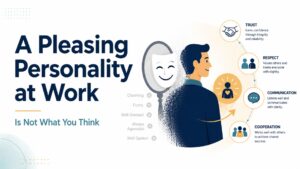
A pleasing personality at work is a pattern of behavior that makes trust, communication, and cooperation easier.
That is something anyone can develop.
You do not need to change who you are. You need to become more intentional about how you work with people.
A Pleasing Personality Is Not Physical Beauty
Let us remove the most common misunderstanding first.
A pleasing personality has nothing to do with being beautiful or handsome.
Appearance may affect a first impression. That is true whether we like it or not. But appearance tells us very little about how someone will behave at work.
A good-looking employee can still be disrespectful, unreliable, or difficult to work with.
A person who does not match society’s idea of beauty can be thoughtful, competent, trustworthy, and excellent with customers.
Professional grooming matters. People should come to work clean and present themselves appropriately for their role. But grooming is not personality, and attractiveness is not character.
When employers use appearance as a shortcut for personality, they risk overlooking good people.
When employees believe they need to look attractive to succeed, they may focus on the wrong thing.
The question is not:
“Do I look pleasing?”
The better question is:
“Does my behavior help people work well with me?”
It Does Not Mean Being Extroverted
Some workplaces reward the people who speak first, talk often, and appear comfortable in every room.
That can make quiet employees feel that something is wrong with them.
There is nothing wrong with being quiet.
A person can be reserved and still communicate clearly. An employee can prefer listening and still make valuable contributions. A manager can be calm and serious without becoming cold or unapproachable.
Extroversion is a personality preference. Professional behavior is a choice.
The office does not need everyone to become talkative. It needs people who know when to speak, how to listen, and how to contribute.
A quiet employee who keeps promises, prepares carefully, and speaks with purpose may be easier to trust than a charming employee who makes promises but does not deliver.
You do not have to become louder.
You need to make your value easier to see.
It Does Not Mean Smiling All the Time
Cheerfulness can make a workplace lighter. A warm greeting, a sincere smile, and a positive attitude can help people feel welcome.
But nobody can be cheerful all the time.
People experience stress, grief, disappointment, illness, family problems, and exhaustion. Asking employees to smile through every difficulty does not create a healthy workplace. It creates emotional acting.
Professionalism does not require you to pretend that everything is fine.
It asks you to manage your emotions responsibly.
You can say:
“I am dealing with something difficult today, so I may be quieter than usual. I will still complete what I promised.”
That is honest and professional.
You are not spreading your pain to everyone. You are also not pretending to be someone you are not.
A pleasing personality is not permanent happiness.
It is emotional responsibility.
It Does Not Mean Agreeing With Everyone
Some people think a pleasing employee is someone who never complains, never argues, and always supports management.
That employee may appear easy to handle.
But silence is not always helpful.
A team member who sees a serious problem and says nothing is not necessarily loyal. A manager who avoids difficult feedback is not necessarily kind. An employee who agrees with every decision may be protecting approval rather than protecting the work.
Good employees know how to disagree without becoming disrespectful.
Instead of saying:
“This plan will never work.”
You might say:
“I see one risk that could delay the project. May I explain what I found and suggest another option?”
The concern remains. The behavior changes.
You are not attacking the person. You are helping improve the decision.
A pleasing personality does not make you agreeable all the time.
It makes you constructive.
What a Pleasing Personality Looks Like at Work
The phrase becomes useful only when we translate it into actions people can observe.
Here are seven behaviors that make someone easier to work with.
1. You Treat People With Respect
Respect is not reserved for senior leaders, important clients, or people who can help your career.
It should also be given to security guards, messengers, cleaners, interns, new employees, suppliers, and difficult customers.
Respect appears in small moments:
- You greet people.
- You listen without mocking them.
- You avoid humiliating someone in public.
- You give credit for other people’s ideas.
- You correct mistakes without attacking character.
- You speak to junior employees with the same dignity you show executives.
A pleasing personality is not about impressing powerful people.
It is revealed by how you treat people who have less power than you.
2. You Make Your Message Clear
Good communication is not about using impressive words.
It is about helping people understand.
You state the main point. You explain what is needed. You clarify the next step. You check whether both sides understood the same thing.
Instead of sending a long message that leaves people guessing, say:
“The client moved the deadline to Friday. I need your final numbers by Thursday at noon so I can complete the report.”
Clear communication reduces confusion, delay, and frustration.
People enjoy working with someone who does not make simple things unnecessarily difficult.
For more specific examples, read Professional Behavior at Work: 8 Habits That Make You Easier to Work With.
3. You Keep Your Promises
Charm can create a good first impression.
Reliability creates trust.
When you say you will do something, people begin making plans based on your word. When you repeatedly fail to deliver, you create problems beyond your unfinished task.
Other people must follow up. Adjust schedules. Explain delays. Repair customer expectations. Or finish the work themselves.
Keeping promises does not mean you will never encounter problems.
It means you communicate early when circumstances change.
You might say:
“I will not finish the entire report by three. I can send the completed first section today and deliver the rest tomorrow morning.”
That message may not be pleasant to give, but it is responsible.
A pleasing personality is not measured by how confidently you make promises.
It is measured by how seriously you keep them.
4. You Listen Before You React
Many workplace conflicts become worse because people prepare their reply while the other person is still speaking.
They hear a few words, form a conclusion, and defend themselves.
Listening does not mean agreeing.
It means understanding before responding.
You can ask:
“Let me check whether I understood you correctly.”
Then repeat the concern in your own words.
This simple habit prevents unnecessary arguments. It also shows the other person that you take the conversation seriously.
People do not always expect you to give them what they want.
But they want to know that you heard what they said.
5. You Bring Possible Solutions
Some employees hide problems because they are afraid of being blamed.
Others report every problem but leave the thinking to someone else.
A more helpful approach is to explain the issue and offer possible next steps.
Use this simple structure:
- Here is what happened.
- Here is why it matters.
- Here are our possible options.
- Here is what I recommend.
You may not always have the perfect solution. You are not expected to know everything.
But bringing possible next steps shows initiative.
It tells people, “I am not only here to point at the problem. I am willing to help move the work forward.”
That is an attractive professional quality—not because it makes you charming, but because it makes you useful.
6. You Take Responsibility
Everyone makes mistakes.
What separates trusted professionals from difficult colleagues is what happens next.
Some people hide the mistake. Others blame the customer, the system, the deadline, the instructions, or another employee.
Responsible people begin with ownership.
They say:
“I missed that detail. Here is what I am doing to correct it, and here is how I will prevent it from happening again.”
Taking responsibility does not mean accepting blame for things you did not do.
It means honestly recognizing your contribution to the outcome.
Excuses protect the ego for a moment.
Responsibility protects trust.
7. You Manage the Impact of Your Emotions
You are allowed to feel angry, disappointed, frustrated, or afraid.
But emotions have an impact.
A manager’s panic can spread across a team. A colleague’s sarcasm can silence good ideas. One person’s uncontrolled anger can make everyone else cautious and defensive.
Emotional responsibility means creating a pause between feeling and action.
Before responding, ask:
- What am I feeling?
- What happened?
- What story am I telling myself?
- What result do I want from this conversation?
- What response will help us move forward?
The goal is not to remove emotion.
The goal is to keep emotion from controlling the room.
Stop Trying to Become Likable
There is a hidden danger in the phrase “pleasing personality.”
It can make people believe their job is to please everyone.
That is impossible.
Some people will dislike your boundaries. Others will dislike your honesty. Someone may become disappointed when you challenge a weak idea, refuse an unreasonable request, or hold them accountable.
You can be respectful and still be disliked.
You can be friendly and still be misunderstood.
You can do the right thing and still lose someone’s approval.
So do not make likability your main goal.
Aim to become trustworthy.
Ask better questions:
- Can people rely on my word?
- Do people understand what I mean?
- Can they speak honestly with me?
- Do I admit mistakes?
- Do I make problems clearer or more confusing?
- Do I help people move forward?
- Can I disagree without attacking anyone?
- Does my behavior make cooperation easier?
These questions move the focus from image to impact.
And impact is what matters at work.
The Real Win Is Trust
When people experience your respectful behavior repeatedly, they learn what they can expect from you.
They know you will communicate clearly. They know you will not hide important information. They know you will raise concerns without creating unnecessary drama.
They know you will own your mistakes. They know your behavior will remain steady even when the work becomes difficult.
That consistency creates trust. And trust is more valuable than charm.
Charm may help you enter the room. Trust makes people want to keep working with you.
To explore this further, read How to Build Trust at Work Without Trying to Be More Likable.
You Do Not Need a New Personality
Many people hear “develop your personality” and imagine that they must become someone else.
They try to talk more, smile more, impress more, and hide the parts of themselves that do not fit the expected image.
That is exhausting. It is also unnecessary.
You do not need to replace your personality. You need to choose behaviors that allow the best parts of you to serve other people.
A quiet person can learn to speak with clarity. A talkative person can learn to listen.
A serious person can learn to show warmth. A friendly person can learn to keep firm boundaries.
A confident person can learn humility. A cautious person can learn to raise concerns with courage.
The goal is not sameness. The goal is effectiveness.
Try This at Work
Choose one workplace situation that happens often.
It might be:
- giving a project update,
- joining a meeting,
- correcting a mistake,
- responding to criticism,
- handling a complaint,
- disagreeing with a decision,
- or asking someone for help.
Then answer these four questions:
1. What usually happens?
Describe the situation without blaming anyone.
2. How do I usually respond?
Be honest about your words, tone, and actions.
3. What impact does my response create?
Does it build clarity, trust, and cooperation—or confusion, defensiveness, and delay?
4. What behavior will I practice next time?
Choose one small move.
For example:
- Ask one clarifying question before responding.
- State the main point in one sentence.
- Offer two possible next steps.
- Admit the mistake without giving an excuse.
- Communicate a delay before the deadline.
- Disagree with the idea without attacking the person.
Do not try to transform your entire personality in one day.
Practice one better behavior in one real situation.
Then repeat it until it becomes natural.
Final Thought
A pleasing personality at work is not about looking attractive, acting cheerful, speaking loudly, or agreeing with everyone.
It is not about winning a popularity contest.
It is about making your presence helpful.
Treat people with respect. Communicate clearly. Keep your promises. Listen carefully. Take responsibility. Raise concerns constructively. Manage your impact.
You do not have to become pleasing to everyone.
Become someone people can understand, respect, and trust.
That is a personality worth developing.


If your team is stuck in meetings, misalignment, or slow decisions…
Let’s design one shift they can use immediately.
→ Shift Experiences
