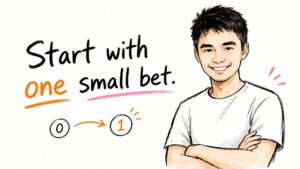
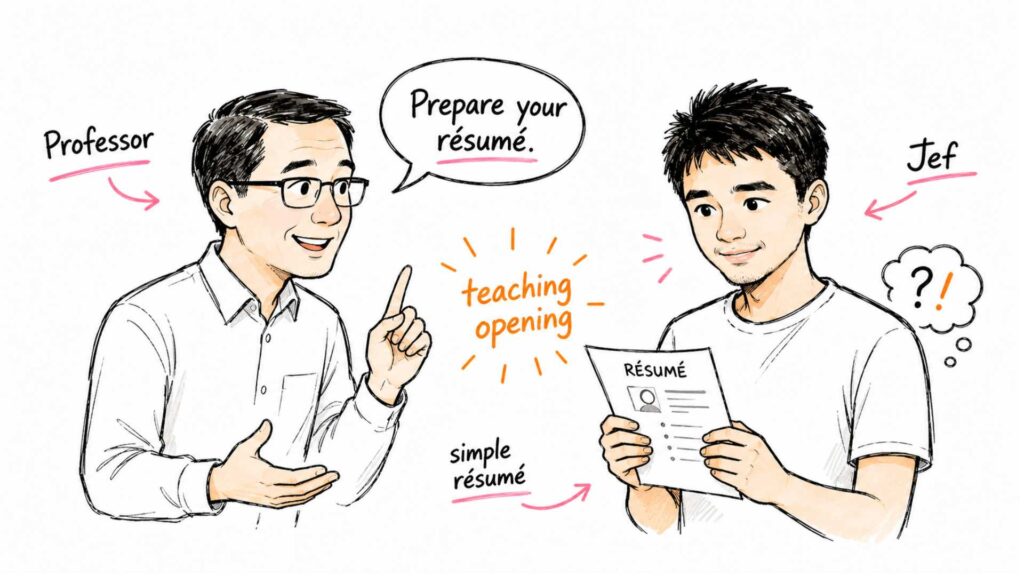
Two months before graduation, one of my professors asked whether I wanted to apply for a teaching position in the high school department.
There was an opening.
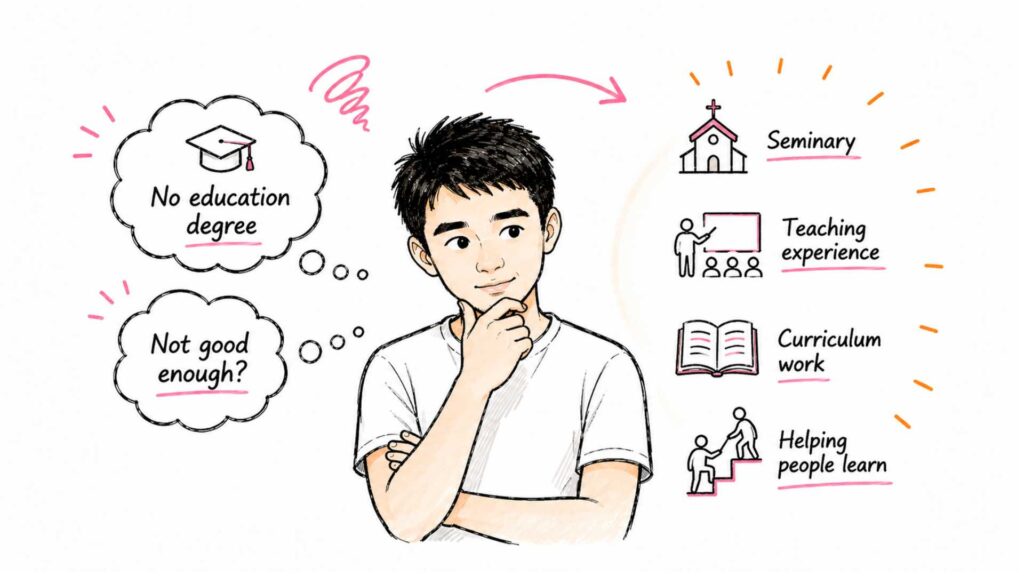
I was not yet a graduate. I had no diploma to show. I did not have a transcript of records. More importantly, I was finishing a degree in political science, not education.
I had no education units. I had never gone through formal teacher training. I knew I was missing qualifications that other applicants might have.
Before I could explain all that, my professor stopped me.
“Just prepare your résumé.”
That created another problem. I did not know what to put in it.
I had not held a regular job. There was no long list of positions, awards, and professional accomplishments. But instead of staring at what I did not have, I wrote down what I had already done.
I had been in the seminary. I had helped create a curriculum. I had spent two years teaching people.
As a campus activist, I also had many teaching moments. We explained issues, organized discussions, and helped people understand ideas that mattered to them.
The people we taught were not listening because they needed a grade. They could walk away whenever they wanted. We had to earn their attention. We had to capture their imagination and make the subject worth listening to.
I did not have a degree in education, but I was not starting from nothing.
That distinction mattered.
I Was Making a Small Bet
At the time, some of my friends had already graduated and still could not find work. Some went to law school partly because they did not know where else to go.
I saw the teaching position as a chance to begin.
If I applied and they rejected me, I would still be where I already was. I would have no job.
But if they accepted me, I would move from zero to one.
That was the bet.
It was not a reckless decision. I was not risking everything. I was giving myself a chance to gain something without losing what I already had.
We often imagine courage as one grand, dramatic act. We think of people climbing mountains, confronting powerful enemies, or risking their lives.
But most acts of courage are much smaller.
You submit the application.
You ask the question.
You offer the idea.
You begin the conversation.
You show up even though you do not know exactly what will happen.
You make a small bet.
“Ikaw Pala”
I submitted my résumé.
I expected that someone might contact me later. Instead, I was told that the principal would interview me immediately.
I waited outside her office for about 30 minutes.
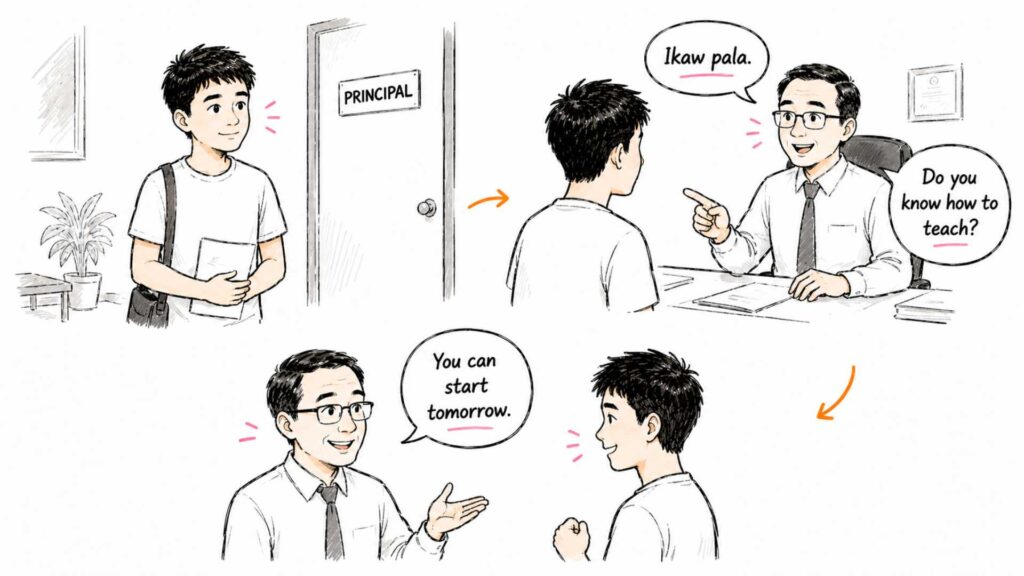
When I entered, she looked at me and recognized me.
“Ikaw pala.”
So, it was you.
I was known on campus as an activist. From her point of view, I may have been one of the school’s troublemakers. I was not entering the room as a safe and predictable applicant.
She asked me one question.
“Do you know how to teach?”
I said yes.
Then I explained what I had done in the seminary. I talked about the curriculum we had created and the people we had taught. I explained that our learners were not required to listen to us. We had learned how to get their attention without using grades as leverage.
I did not pretend that I had qualifications I did not have. I simply showed her that although my experience looked different, it was still real.
After about 15 minutes, she said, “You can start tomorrow.”
I entered the room without a diploma, without education units, and without certainty that I would be accepted.
I left with a teaching job.
The Fear of Not Being Good Enough
What could have stopped me?
The belief that I was not good enough.
That fear was not entirely imaginary. I really did lack formal teacher training. Much of what I knew about teaching came from experience, observation, and guesswork.
I remembered how my teachers taught when I was in high school and college. I used what seemed useful. I adjusted based on how people responded.
I had experience, but I did not yet have the official identity of a teacher.
Many people find themselves in the same place.
They have done parts of the work, but they do not feel entitled to claim the role.
They have useful experience, but it does not look like the experience written in the job description.
They have something to offer, but they can also see everything they lack.
Because of that, they wait.
They wait until they have another certificate. They wait until someone tells them they are ready. They wait until the fear goes away.
Sometimes, preparation is necessary. I would never tell a person to perform surgery because they once watched a doctor work.
But there are also moments when preparation becomes a hiding place. We keep collecting proof because we are afraid to test what we can already do.
The Challenge May Be Smaller Than Your Fear
Stepping outside your comfort zone gives you information that thinking alone cannot provide.
Before you act, the challenge may look enormous. You see all the possible mistakes. You imagine rejection, embarrassment, failure, and judgment.
But until you take the first step, you do not really know how easy or difficult the challenge is.
Our minds often enlarge the problem and shrink our ability.
The opportunity looks too big.
The conversation looks too hard.
The audience looks too intimidating.
The first attempt looks too risky.
But once we begin, we often discover that the challenge is smaller than we imagined. We also discover that we are more capable than we believed.
That was what happened to me.
I did not become an expert teacher during a 15-minute interview. But the interview showed me that my previous experiences counted. I had already been learning how to teach, even before anyone gave me the title.
I was not empty.
I was not starting from zero.
I was more than enough to take the next step.
Courage Does Not Always Feel Like Courage
We often expect courage to arrive as a strong feeling.
We imagine that brave people wake up confident. They know what to do. They feel prepared. They do not doubt themselves.
That is not always how courage works.
Sometimes courage feels like uncertainty.
Sometimes it looks like an incomplete résumé.
Sometimes it sounds like a simple yes before you know how everything will work.
You do not need to feel brave before making a brave move.
The feeling may come later.
Confidence is often the result of action. It is not always the requirement for action.
You do something difficult. You survive it. You learn. Then you begin to trust yourself a little more.
The first move gives you evidence.
The second move gives you experience.
The third move gives you momentum.
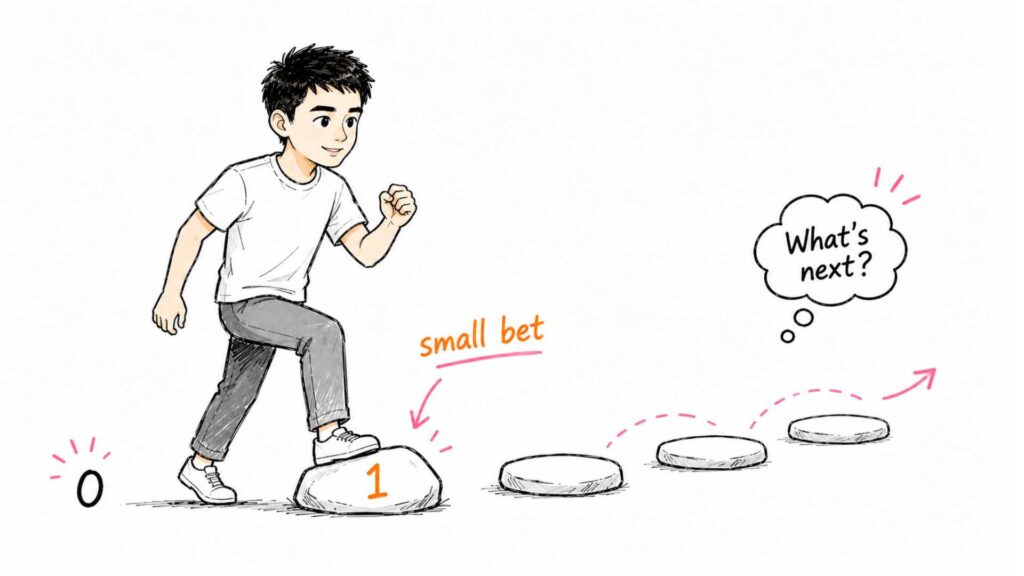
Move From Zero to One
People often become overwhelmed because they are looking at the hundredth step.
They imagine everything they need to learn, finish, fix, and overcome. The distance between where they are and where they want to go appears impossible.
But you are not being asked to take 100 steps today.
I am not asking you to fly to the moon.
Take one small step.
Submit the application.
Write the first page.
Call the person.
Ask for help.
Raise your hand.
Introduce yourself.
Share the idea.
The first step is often the most difficult because it breaks the story that says you cannot begin.
After that, the question changes.
Instead of asking, “Can I do this?” you begin asking, “What is next?”
Then you take the second step.
And the third.
And the fourth.
You do not finish a hundred-step journey in one heroic leap. You finish it by repeatedly answering one question:
What is the next brave move?
Make One Small Bet Today
Think of something you have been postponing because you do not feel ready.
Do not begin by asking whether you can complete the entire journey. That question may make the challenge feel too large.
Ask these questions instead:
What do I stand to lose if I make one small attempt?
What might I gain?
What experience do I already have that I may be undervaluing?
What is one step I can take without pretending that I know everything?
Your small bet does not guarantee success.
Mine did not guarantee that the principal would hire me. She could have said no, and I would have gone home without a job.
But courage is not a guarantee that you will get what you want.
Courage gives you the chance to find out what is possible.
Had I not prepared that thin résumé, I would have remained at zero.
Because I acted, I started teaching the next day.
One small bet changed the direction of my life.
Your next brave move may not look impressive to anyone else. It does not have to.
It only needs to move you from zero to one.
Everyday Courage is one of the messages I bring to organizations, conferences, and teams. It helps people recognize the ordinary moments when fear, uncertainty, and self-doubt keep them from acting—and shows them how to make the next brave move.
Explore Everyday Courage and my other motivational speeches.
