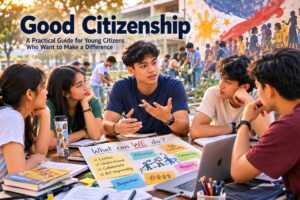
In one of my workshops, I asked a group of young people to name a problem in their community that bothered them. They were Sangguniang Kabataan officers, and many of them were college students too. They knew the young people in their barangays because they studied with them, grew up with them, played basketball with them, and saw what happened when some of them stopped going to school.
One problem came up quickly: teenage pregnancy.
They had seen girls become mothers before they were 18. They had seen young men become fathers before they were ready. Some of these young people never reached college, and for the SK officers in the room, this was not an issue they had discovered in a report. These were people they knew.
So I asked them why they thought it was happening.
Some believed it was mainly a discipline problem. Young people were making poor choices, they said, and they had to become more responsible. Others thought the community itself was part of the problem because there were not enough programs, activities, and opportunities for young people.
Then someone brought up money. Perhaps the SK could do more if there were enough funds, but without a budget, what could they really do?
I have heard versions of these answers many times when I speak with students. The government should do something. The school should do something. Parents should do something. We do not have the money. We do not have the authority. We are only students.
Some of these are not excuses. They are real constraints.
But they do not have to be the end of the conversation.
When “We Can’t” Becomes “What Can We Do?”
When students tell me that they do not have enough money, I do not tell them to think positively and pretend that money does not matter. I ask them to look again at the situation and tell me what they already have.
The SK may not have much money, but it has access to the community. Its officers know the young people. They know families, gathering places, schools, basketball courts, and the places where young people spend their time. They have relationships and local knowledge that an organization coming from outside the barangay may take months to build.
Then I ask them to consider who else might care about the same problem.
There are NGOs, foundations, universities, government agencies, professional organizations, businesses, and grant-giving bodies that want to work on problems involving young people, health, education, and communities. Some have money. Others have technical expertise, training materials, facilitators, research, or access to networks.
But many of them have a problem too.
They may have resources but no community. They may want to help but not know which young people need help, what is really happening on the ground, or whom they can trust to work with locally.
Suddenly the problem looks different.
The SK does not need to ask only, “Where are we going to get the money?” It can also ask, “Who else wants what we want, and what can we make possible together?”
Perhaps the SK brings access to the community while another organization brings expertise. Perhaps a university contributes research or volunteers. Perhaps a foundation helps fund a pilot program while barangay leaders provide space and local support.
This is usually the part of the conversation where somebody says something I love hearing from young people:
“Pwede pala ’yun.”
Nothing magical happened. The funding did not suddenly appear, and teenage pregnancy did not disappear because of a workshop conversation. What changed was that the students could now see moves they could not see before.
That ability to see another move is important to me because I think it belongs at the heart of good citizenship.
Good Citizenship Is More Than Good Behavior
Many young people genuinely want to help. I have seen this again and again in universities, youth organizations, workshops, and communities. They care about their classmates, their families, the environment, mental health, poverty, misinformation, bullying, corruption, and many other problems.
What they sometimes lack is not concern but agency. They see something wrong, yet the choices available to them seem very small: solve the whole problem or accept it, have enough money or do nothing, have authority or wait for the people who do.
That is why I want to expand the way we talk about good citizenship.
Good citizenship certainly includes following good laws, voting responsibly when we become eligible, paying taxes, taking care of public spaces, respecting other people, and doing our share. These are essential responsibilities, but they are not the whole of citizenship.
A person can obey every rule and still remain a spectator whenever something in the community needs to become better.
For me, Filipino good citizenship is active participation in the life of the bayan. It means caring enough to notice what is happening, thinking carefully about what can be done, and finding ways to contribute with others.
We may not be able to change the whole world. But most of us can improve some part of the world we already belong to.
And for a student, that world is not only the country.
It is also the classroom, the university, the student organization, the group chat, the neighborhood, the barangay, and the circles of people whose lives regularly touch ours.
Sometimes Good Citizenship Is a Study Circle
I remember something much simpler from my own college days.
Some of my classmates found subjects like political science and international law difficult. The readings could be demanding, and once you failed to understand one part of the discussion, the next lesson could become even harder to follow.
We could have treated that as an individual problem. We were all students, after all. We attended the same classes, listened to the same professors, and had our own responsibility to study.
Instead, we formed study circles.
There was no grand program behind it. We did not write a project proposal, look for funding, elect officers, or ask anyone to recognize what we were doing. We simply learned together.
Before class, we could go over what we had read. Someone who understood one part could explain it in another way. Someone else could raise a question the rest of us had missed. Sometimes teaching a concept to a classmate helped you understand it better yourself.
It was a small response to a small problem in the little world we belonged to.
Yet the same citizenship idea was present in that study circle and in my later conversation with the SK officers. We noticed something that could become better. We did not assume we had to solve everything. We looked at what we had, found people who could work together, and made a move.
That is agency.
And students can practice it long before they graduate.
Bayan, Malasakit, Bayanihan, and Bayani
There are Filipino words that help me explain the kind of citizenship I want to encourage.
The first is bayan. We translate it in different ways—community, town, country, nation—but there is a powerful idea of belonging inside the word. This is our place. These are our people. What happens here concerns us because we are part of it.
Then there is malasakit. Malasakit goes beyond feeling sorry for somebody. It is concern rooted in connection. When I have malasakit, I cannot easily dismiss what is happening around me as somebody else’s problem because I recognize that the condition of the community eventually affects all of us.
I have written elsewhere about how our Filipino values must become visible in what we actually do. A value becomes meaningful when it changes how we respond when the moment arrives.
Then there is bayanihan.
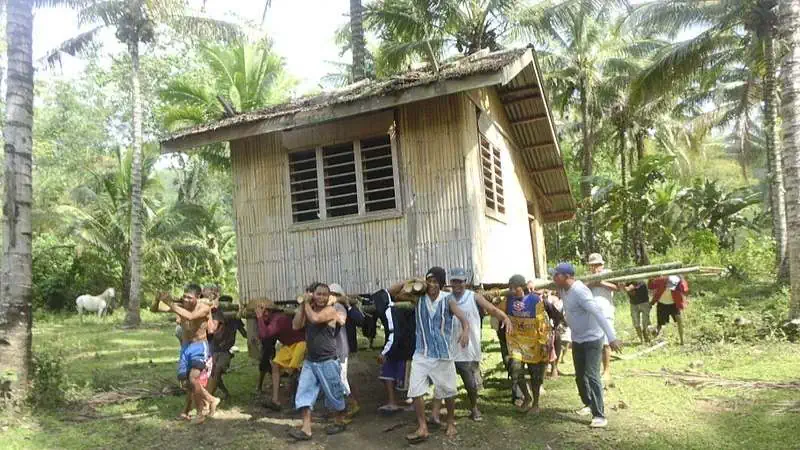
We often explain bayanihan through the familiar picture of neighbors carrying a bahay kubo. But the value is larger than the picture. Bayanihan tells us that improving the bayan is shared work, and that between helpless waiting and trying to solve everything ourselves lies a large space for responsible participation.
I explore that idea more fully in Bayanihan: Culture That Turns Ordinary Filipinos Into Heroes.
Bayanihan also gives us another way of looking at the bayani. The English translation is usually “hero,” which can make us imagine someone extraordinary who performs a great act for the nation. But I want young Filipinos to see something closer to home.
A bayani cares about the bayan enough to participate in making it better.
Bayanihan, then, is not simply a value about helping one another. It is also an invitation for ordinary people to become bayani together.
This understanding is close to something I have been developing across my writing on good citizenship rooted in Filipino values. Our values already contain resources for citizenship. The challenge is to make those values work when actual choices have to be made.
Before You Act, Learn to See
There is a danger in talking about agency. We can make action sound automatically good, as if taking initiative is always better than waiting.
It is not.
People can act with good intentions and make situations worse. We can become so eager to help that we solve the wrong problem, ignore people who know more than we do, or impose our preferred solution on those who will carry its consequences.
That is why I ask students to begin by seeing the situation more clearly.
What is actually happening? What do we know, and what are we merely assuming? In the SK conversation, saying that teenage pregnancy is a discipline problem is already an interpretation. It may contain some truth, but it does not tell us everything we need to understand before deciding what to do.
Then we identify the givens. Perhaps there really is very little money. Perhaps a student does not have authority to change a university policy. Perhaps a deadline is tomorrow, a rule is already in place, or certain decisions can only be made by qualified professionals.
A constraint is not something we have to deny. It tells us what world we are acting inside.
Then I want students to look ahead. If nothing changes, what happens to the people involved? Does the problem remain small, or does it become harder? Who carries the consequences if everyone decides that somebody else should take responsibility?
Only then do we start searching for moves.
This is where I encourage students not to stop with the first two choices they see. Who else cares about the problem? What do we already have? What can another person or organization contribute? Is there a smaller experiment we can try? Is there another way to frame the problem that gives us better options?
Good citizenship requires values, but values alone do not tell us every move to make.
We also need judgment.
What Would You Do?
Consider a student whose classmate works at night.
At first, the classmate simply looks tired. Then she starts missing meetings and failing quizzes. Eventually she talks about dropping the subject because she can no longer keep up.
You want to help. Giving her your answers might get her through the next requirement, but it will not necessarily help her learn. Telling her to manage her time better may contain some truth, but it does not change the reality she is dealing with.
What other moves are available?
Perhaps three classmates can form a small study circle. Someone can share notes after a missed class. She might speak with the professor before the situation becomes worse. The useful question is not merely whether you should help, but what kind of help makes the situation better rather than simply easier.
Now consider a different situation.
A student in your class becomes the subject of jokes in a group chat. At first the jokes seem harmless, but soon people are posting screenshots, editing photos, and becoming more personal. You are uncomfortable, yet you also know that challenging the group could make you the next target.
There is a values question here, but there is also a question of possible moves. You might speak publicly, message the student privately, talk first with one or two friends who also seem uncomfortable, stop contributing to the laughter, or bring the concern to someone who is in a better position to help.
There may be more than one responsible response.
That is worth remembering because good citizenship is not a multiple-choice examination where the teacher always has one answer hidden at the back of the book.
When There Is No Budget
Imagine that students in your university are increasingly talking about stress. Some are exhausted, some feel isolated, and a few have quietly stopped joining activities.
Your organization wants to do something, but the budget is almost gone.
Someone says, “Maybe next semester.”
That could be a reasonable decision. But before ending the conversation, you could also ask whether someone in the university already has expertise. Perhaps the guidance office is working on the same concern. An alumnus may work in this field. Another organization may have resources. A professional group or NGO may be willing to collaborate.
The point is not that every student organization should launch another program.
The point is that “we have no budget” is information, not always a verdict.
This is what the SK officers were beginning to discover. When we see only what we lack, our options shrink. When we also see what we have and what others can contribute, new combinations become possible.
When Your Values Pull in Different Directions
Some citizenship moments are harder because the problem is not a lack of ideas. Two things you value may pull you in opposite directions.
Imagine discovering that a close friend submitted an assignment produced almost entirely by AI even though the professor clearly required individual work. Your friend asks you not to make a big deal out of it.
Integrity matters, but so does friendship. Fairness to everyone who did the work matters, but your friend’s circumstances may matter too.
What would a responsible friend do?
You might confront the person privately, help your friend redo the work, encourage them to talk with the professor, remain silent, or decide that the situation requires another response. The important thing is not to jump immediately toward the answer that makes you feel most righteous.
Look at the situation. Understand what is at stake. Consider who may carry the consequences, and then decide which move you can responsibly defend.
Our Filipino values are useful precisely because they influence how we make decisions, treat people, face difficulty, and understand our responsibilities. But values become most interesting when they have to work in a real situation.
When Authority May Be Wrong
Suppose your university introduces a rule that creates a serious difficulty for some students.
One group immediately attacks the administration online. Another tells everyone to stop complaining and simply follow the rule.
You are not sure which side is right.
That uncertainty may be a good place to begin.
What problem was the policy intended to solve? Who is being affected by the way it is being implemented? Do the decision-makers know about those effects? What evidence can students gather, and is there a way to propose an improvement instead of choosing only between obedience and outrage?
Good citizenship does not require silence in front of authority. A citizen may question, challenge, propose, organize, and ask institutions to become better.
But responsible participation asks us to understand before we condemn.
The Problems Nobody Owns
There is another kind of situation I want students to notice.
Something is wrong, everybody can see it, but nobody seems responsible for doing anything about it. It may be happening in a classroom, a student organization, a university, or a barangay.
Then somebody says:
“Hindi ko naman trabaho ’yan.”
Perhaps technically, that person is correct.
But communities contain many problems that live between people’s job descriptions. Everyone notices them, nobody owns them, and nothing changes because each person is waiting for the person who is officially responsible.
Good citizenship does not mean taking every problem upon yourself. You do not have the authority, competence, energy, or time to solve everything around you, nor should you try.
But you may be able to help a problem find an owner.
You can ask who else has noticed it. You can bring the right people together. You can show the problem to somebody who has authority. You can contribute one part while another person contributes another.
Sometimes citizenship is not solving the problem.
It is helping the right people see that the problem can be solved.
Agency Does Not Mean Doing Everything Yourself
This distinction matters.
Agency is not the belief that “I can do anything.” It is the belief that even when I cannot solve the whole problem, I can still search for a responsible move.
Sometimes that move is action. Sometimes it is gathering information, asking for help, reporting something, finding a partner, protecting someone, or bringing the issue to a person with the expertise and authority to address it.
There will also be times when the right thing is to wait until you understand more.
Good citizens do not replace institutions. We need schools, government agencies, health professionals, law enforcement, courts, businesses, NGOs, families, and many other institutions to perform responsibilities that properly belong to them.
Bayanihan does not mean carrying everybody else’s responsibilities.
It means refusing to accept the false choice between waiting helplessly and trying to do everything alone.
The Kind of Good Citizenship I Want to Promote
I want Filipino students to know their civic responsibilities. I want them to respect other people, follow good laws, care for shared spaces, vote responsibly when they become eligible, and do the ordinary things that allow communities to work.
But I want more for them than compliance.
I want them to recognize themselves as people who can participate in improving the bayan they belong to. They can notice problems, question assumptions, generate possibilities, find partners, and make responsible moves even when they do not have all the money, authority, or answers.
An SK officer can practice this in the barangay. A student can practice it in a study circle. A class can practice it when somebody is being excluded. A student organization can practice it when a problem is bigger than its budget.
The situation changes, but the citizenship muscle is the same.
You begin by seeing.
You care enough not to look away. You understand the givens without allowing the givens to make every decision for you. You look for possibilities and find people who can move with you.
Eventually, perhaps, you discover yourself saying:
“Pwede pala ’yun.”
That is a small sentence, but it can mark an important shift. You are no longer seeing yourself only as someone waiting for change. You have begun to see yourself as someone who can participate in making change possible.
That is malasakit finding a move.
That is bayanihan becoming practice.
And perhaps that is one way ordinary Filipinos become bayani: not because we all perform extraordinary acts for the entire country, but because we care enough to improve the portion of our bayan where we already stand.
Practice Before the Stakes Become Bigger
The situations students face will become more difficult later.
At work, you may discover that something profitable for the company harms a customer. You may have to disagree with someone who has more authority than you. You may have to decide whether loyalty to a colleague should keep you silent about a serious mistake.
Graduation does not suddenly give us good judgment.
We practice judgment now.
We practice it in classrooms, friendships, organizations, online conversations, and communities. We practice it every time we decide whether to remain a spectator, rush toward an answer, or look carefully enough to find a responsible move.
You may not be able to change the whole world, and I am not asking you to.
Look instead at the world you already belong to.
Perhaps there is something there that can become better.
Perhaps there is something you can do.
And perhaps there are people who will do it with you.
That is a good place to begin.
Practice With the Scenarios
I am preparing a Good Citizenship Scenario Guide that will let students work through situations like the ones in this article. Instead of giving an answer key, the guide will help you examine what is happening, identify the givens, consider who may be affected, generate possible moves, and compare your reasoning with sample responses.
The purpose is not to tell you what a good citizen must do in every situation.
It is to help you become better at seeing what you can responsibly do when your choice matters.
Download the Good Citizenship Scenario Guide.

If you want Filipino values to show up as real behavior at work…
Let’s turn it into a culture shift experience.
→ Shift Experiences
