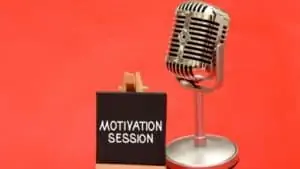
For a long time, I thought becoming a better speaker meant becoming a better performer.
I studied debate. I studied speeches. I paid attention to pronunciation, pacing, phrasing, gestures, eye contact, facial expressions, and movement. When I joined Toastmasters, I encountered even more advice about how to command the stage, use the spotlight, and make an impression.
Much of that was useful. But it also created pressure because every speech carried an invisible question in my head:
How do I wow them?
That question changes the way you speak. You start monitoring yourself while you are speaking. You wonder whether the gesture looked right, whether the pause was long enough, whether your voice had enough power, whether you moved to the right place at the right time.
You begin performing the speech instead of living inside it.
And the audience can feel that too.
The Question That Changed My Speaking
One of the people who changed how I thought about speaking was Vic Santiago.
I had seen him speak for only a couple of minutes and hold an entire room. There was no obvious theatrical effort. Yet something happened to us while he was speaking.
So I asked him for advice.
He told me, in essence, that one of my problems was that I was trying to perform like other speakers. But I already had something different.
I was a teacher.
When I taught, I did not stand in front of students thinking about how impressive I looked. I wanted them to understand. I wanted them to see what I was seeing. I wanted to give them something useful.
Then he gave me an idea I have carried ever since:
A speech begins with you, but it is not about you.
That changed the question.
Instead of asking, How did I perform?, I began asking:
What did the speech do for the people listening?
That is a much better question for a motivational speaker.
A Speech Is a Gift
Vic also helped me see speaking as gift-giving.
That idea removed a lot of pressure.
When you give a gift, the attention is not supposed to remain on the giver. You think about the receiver. What might be useful? What might bring joy? What might help?
You prepare because you care about what happens when the gift reaches the other person’s hands.
A speech works the same way.
You bring something into the room: a story, an idea, a question, a challenge, a possibility, perhaps a tool. Then you offer it.
The audience may accept it. They may reject it. They may use it differently from the way you imagined. That part belongs to them.
Your responsibility is to make the gift worth receiving.
When I started thinking this way, speaking became lighter. I stopped trying so hard to manufacture an impression and began paying more attention to the people in front of me.
And something else happened.
The room relaxed too.
From Performance to Shared Space
When you are stiff, calculated, and constantly managing yourself, people begin watching you as a performer. You are onstage. They are in the audience. You perform. They observe.
A distance forms between you.
But conversation collapses that distance.
Think about how you tell a good story to your friends. You may gesture widely. Your face changes. Your voice changes. You lean forward. You look at one person, then another.
But you are not thinking about those things.
You are thinking:
I want you to see what happened.
That intention gives life to the gestures. Your face moves because you are inside the experience. Your body participates because the story is alive.
Nothing feels manufactured.
That is the kind of speaking I want onstage.
When the speaker stops performing at the audience and starts speaking with them, the stage expands. It is no longer only the platform beneath your feet. The whole room becomes the stage.
Eye contact becomes natural because you are actually looking at people. You notice the person who leans forward. You notice where laughter comes easily and where silence becomes heavy. You respond. You adjust.
You remain present.
Of course, you may still be the only person holding the microphone, but the experience is now shared. The story stops belonging only to you and starts becoming ours.
Let the Audience Become the Hero
This is where motivational speaking becomes more than performance.
The audience must enter the story.
They should begin remembering their own experiences while listening to yours. Your fear should remind them of their fear. Your difficult choice should cause them to examine a choice of their own. Your possibility should make them wonder what might still be possible for them.
When that happens, the speech becomes intimate even in a large room.
A thousand people may be listening to the same speaker, yet one person can still feel:
This is somehow about me.
That is not because the speaker knows everyone’s story.
It happens because the speaker has made enough room for the listener’s story to enter.
If I tell a story about failure and the audience leaves only thinking, Jef overcame a difficult experience, the story has stopped too early.
The better outcome is:
What am I doing with the failure in my own life?
If I speak about courage, I do not want courage to remain attached to my story. I want someone to begin thinking about the conversation he needs to have tomorrow morning.
If I tell a story about creating opportunities, I want someone in the room to stop following my journey and start seeing the stage she could create for herself.
My story should become a mirror.
The audience should find themselves inside it.
The Speaker Is the Mentor
If the audience is the hero, the speaker may be closer to the mentor.
A mentor helps the hero see. The mentor can ask a question, offer a tool, tell a story, challenge an assumption, or point toward another road.
But the mentor cannot live the hero’s life.
At some point, the mentor has to disappear.
That is exactly what happens after a speech.
The microphone goes silent. The lights go down. The event ends.
The manager returns to the office. The teacher returns to the classroom. The recruiter opens another application. The entrepreneur faces the same difficult decision.
You are no longer there.
That is how it should be.
Your goal is not to make people dependent on your presence.
Your job is to make movement more possible after you leave.
A Good Motivational Speech Works Like a Good Movie
A good movie is carefully made. There are scripts, rehearsals, camera angles, lighting, music, editing, and thousands of decisions behind what reaches the screen.
But when the movie works, you stop thinking about all of that.
You enter the story.
You laugh. You cry. You become afraid. You hope.
For a moment, you stop watching a character and begin experiencing something yourself.
That is the effect I want from a motivational speech.
This is why I rehearse. I study stories, sequencing, language, timing, questions, silence, transitions, and endings.
Not so people will admire the machinery.
I want the machinery to disappear.
If the audience keeps noticing my gestures, my cleverness, and my technique, perhaps they are still spectators.
I want them inside the story.
Understand the World They Already Live In
You cannot create a meaningful new reality for people if you do not understand the reality they are currently living in.
So the work begins before the speech.
Who are these people? What are they trying to make happen? What has disappointed them? What do they already know? What advice have they heard too many times? What are they afraid to attempt? What do they no longer believe?
The better you understand the room, the less you need generic motivational language.
You can speak to the situation they actually recognize.
This is also why customization matters.
Customization does not always mean rewriting every sentence of your speech. It means ensuring the message belongs in this room.
The central idea may remain. The stories may remain. But the way the message enters—the examples, questions, language, emphasis, and application—should respect the people in front of you.
Create a New Reality They Can Enter
I now define a motivational speech this way:
A motivational speech creates a new reality for the audience, helps people see themselves inside that reality, and moves them to begin making it real today.
That is why I think motivational speaking is a kind of world-building.
You are not creating a fantasy.
You are helping people see a different version of what may already be possible.
A recruiter may have seen only quotas and vacancies. Now she sees families whose lives may change because someone found meaningful work.
A manager may have seen leadership only as getting things done. Now he sees that every conversation also shapes another person’s confidence and growth.
A student may have believed opportunity belongs to people who are already chosen. Now she begins seeing that a stage can also be created.
Nothing outside them may have changed yet.
But a different world has become visible.
And once that world feels believable enough, people may begin stepping into it.
Help People Feel Good About Themselves
One of the first things I would want to do in a motivational speech is help people feel good about themselves.
Not by flattering them.
Not by pretending they have no weaknesses.
I mean helping them recognize something valuable in themselves that they may have forgotten: their courage, resourcefulness, ability to learn, contribution, capacity to begin again, or importance in the life of another person.
When people recover a sense of their own capacity, they do not have to borrow greatness from the speaker.
They begin to recover their own.
That creates a very different kind of motivation.
The message is no longer:
Look at what I achieved. Follow me.
It becomes:
Look again at what may be possible in you.
That is an invitation.
Use Stories to Create Vicarious Experience
Stories matter because they allow people to experience another world before they enter it themselves.
For a few minutes, we borrow another person’s experience. We enter the fear. We feel uncertainty. We experience the mistake. We watch the decision. We see the result.
Then we return to our own situation carrying something we did not have before.
Possibility.
This is why motivational stories can stay with people for years.
They do not merely tell the listener what to do.
They let the listener feel what another way of living might be like.
One story pattern I sometimes use is:
Desire → Disaster → Decision → Direction
Someone wants something. Then something goes wrong. A decision must be made. That decision changes the direction of the story.
The pattern works because people recognize it.
We all want something.
We all encounter difficulty.
And sooner or later, we all arrive at moments when a decision matters more than another explanation.
The pattern is not a formula for every story. It is simply one way to help the audience experience movement.
Give Movement Somewhere to Land
Many speakers save the action step for the end.
Three things to do. One challenge. A final instruction.
There is nothing wrong with that.
But if movement only begins during the last three minutes, the speech may have waited too long.
The audience should already be moving internally. A story has made something visible. A question has unsettled an assumption. A possibility has become believable.
Someone may already be thinking:
I need to talk to my team differently.
I should stop waiting.
I can try this.
I still have time.
I cannot keep doing this the same way.
That is movement.
The call to action merely gives that movement somewhere to land.
When an action is useful, make it small enough to own. Ask the manager to begin one conversation. Ask the teacher to see one student differently. Ask the entrepreneur to test one idea. Ask the person waiting for confidence to make one first move.
The action should be small enough to start and meaningful enough to matter.
Rehearse Until the Craft Disappears
I still believe in rehearsal.
I believe speakers should understand pacing, silence, storytelling, voice, movement, structure, and language.
But the purpose of rehearsal is not to make the audience notice how well rehearsed you are.
Rehearse until the structure supports you.
Practice until the words feel lived rather than recited.
Know your story well enough that you can stay present with the room.
Master technique so you no longer have to display technique.
The craft should help the audience enter the experience.
Then it should disappear.
The Speech Begins With You, but the Audience Must Finish It
This may be the most important shift I have made as a speaker.
I began by asking:
How can I impress them?
Now I ask:
What can I help them see?
That question creates a different speech.
Understand the world the audience already lives in. Bring them a gift worth receiving. Tell stories they can enter. Let your story become a mirror. Help them recover something valuable in themselves. Create another reality that feels believable enough to enter.
Then give movement somewhere to land.
And step aside.
Because the speech begins with you.
But the audience must finish it.
If you want the deeper definition behind this approach, read What Is a Motivational Speech?.
If you want to know where this philosophy began for me, continue with How I Became a Motivational Speaker.
If you want to understand the person who does this work, read What Is a Motivational Speaker?.
And if you want to create opportunities to share your own ideas before anyone gives you a stage, explore Create Your Stage.
I still rehearse. I still study the craft. I still want to give an excellent speech.
But I no longer want the audience to leave thinking only about the person who stood onstage.
I want them thinking about themselves—their story, their possibilities, and their next move.
That is when motivational speaking becomes more than performance.
It becomes a shared world.


If your team is stuck in meetings, misalignment, or slow decisions…
Let’s design one shift they can use immediately.
→ Shift Experiences
