On his break in a factory in Dubai, Joel checked his phone.
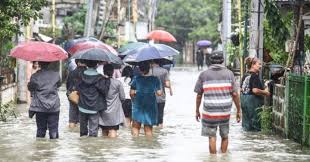
There was a video from home. Brown water swallowing houses. People screaming names.
By the time he reached his sister, it was too late. His parents and two nephews were gone—trapped inside a house that had flooded in minutes.
Later, neighbors would say the same thing: “Hindi naman ganito dati.” Later still, reports would surface: a flood control project that existed only on paper. A river dredging budget released twice. Drainage funds approved, liquidated, and quietly forgotten.
Joel had sent money home every month. But someone else had already taken more.
This is what corruption looks like when it finally reaches the ground. Not headlines. Not speeches. Bodies.
And the painful truth is this: leaders who cause these disasters almost always show red flags early. We just don’t like looking at them.
Red Flag 1: Power That Stays in the Family
In San Isidro Norte, Mayor Ramon del Fierro finished his third term and was immediately replaced by his wife. When she reached her term limit, their son ran—campaign posters calling it “continuity of service.” What continued was control: the same contractors, the same allies, the same unexplained wealth.
In another province, Governor Lito Barrameda stepped down “voluntarily” due to health reasons. His younger brother took over. Key department heads stayed the same. So did the missing funds for farm-to-market roads that never reached the farms.
When public office moves like an heirloom, service quietly turns into ownership. Decisions stop serving citizens and start protecting the family name.
Red Flag 2: Fear of Transparency
When journalists asked Mayor Cynthia Razon about her sudden acquisition of three condominium units, she laughed it off. “Matagal na ‘yan. Personal na ‘yan.” No documents. No explanation.
Senator Victor Alonzo, meanwhile, refused to release a full breakdown of campaign donors, saying it would “distract from his work.” The distraction, it turns out, was a series of bills favoring industries linked to those same donors.
Leaders who have nothing to hide don’t panic when asked to explain. They explain. Evasion is not privacy. It’s warning.
Red Flag 3: Conflicts of Interest Treated as Normal
Mayor Edgar Molina approved a housing project built by a construction firm registered under his cousin’s name. He insisted it was legal because the paperwork was “clean.” The houses cracked within two years.
At the national level, Cabinet Secretary Rogelio San Pascual pushed for importation policies that benefited a logistics company where his former business partners now sat as executives. He claimed he had “no more connection.” The profits said otherwise.
Conflict of interest isn’t about intent. It’s about temptation—and whether leaders choose to step away or lean in.
Red Flag 4: Gift Culture Disguised as Kindness
In Barangay Maligaya, Mayor Jun Arce distributed envelopes before election day. Labeled “emergency assistance.” Everyone knew the emergency was the vote count.
Elsewhere, Congressman Paolo Dizon handed out appliances after a typhoon—each box stamped with his face and name. When residents later demanded accountability for delayed rehabilitation funds, the response was silence.
When leaders teach citizens to accept gifts instead of systems, they train people to expect favors—not rights.
Red Flag 5: Attacking Accountability
When a local paper exposed irregularities in a school-building project, Governor Nena Quiambao called the journalists “paid hacks” and threatened libel. She never addressed the missing classrooms.
At the Senate, when questioned about budget reallocations, Senator Marco Velasco went on a tirade against “elitist critics” instead of answering where the money went.
Leaders who attack questions are telling you something: the answers are dangerous.
Red Flag 6: Platforms Made of Vibes
Candidate Leo Santos promised “Hope and Unity” in every rally. When pressed on traffic, housing, or wages, he repeated the slogan—louder.
Another presidential aspirant, Angela Cruz, spoke passionately about “a better future for all,” but could not name a single program she would stop funding to pay for her promises.
When everything sounds good and costs nothing, you’re not hearing leadership. You’re hearing advertising.
Red Flag 7: Cruelty Marketed as Strength
Mayor Rudy Cañete ordered violent clearing operations in urban poor communities, dismissing displaced families as “collateral damage for progress.”
National security chief Oscar Beltran justified wrongful arrests by saying, “May nadadamay talaga.” No apology. No reform.
Strength that punishes the powerless is not strength. It’s convenience.
Red Flag 8: Truth Bent for Comfort
Governor Felix Noriega claimed poverty had gone down in his province. Independent data showed the opposite. He called the data “biased.”
Education Secretary Lorna Reyes declared classrooms “fully equipped.” Teachers posted photos online: broken chairs, no books.
Leaders who bend truth today will bend rules tomorrow.
Red Flag 9: Fan Clubs Instead of Teams
Mayor Anton Reyes made every project revolve around his image—billboards, social media, slogans. When he fell ill, city operations stalled. No systems. No empowered deputies.
A national leader built a movement centered entirely on loyalty to him. Cabinet members rarely disagreed publicly. Policies changed with his mood.
Governance requires institutions, not idols.
Red Flag 10: Promises Without Receipts
Governor Melvin Sotto boasted of “record infrastructure spending.” A COA audit later revealed half the projects were unfinished.
Congresswoman Irene Valdez promised jobs and delivered ribbon cuttings. Employment numbers never moved.
If leaders cannot show results beyond tarpaulins, believe the results—not the posters.
Why This Matters
Joel still sends money home. Now it goes to rebuilding graves.
The flood that killed his family wasn’t just rain. It was years of ignored red flags, multiplied by power.
Democracy doesn’t collapse in one dramatic moment. It erodes—when citizens accept patterns they should reject.
Your shift today: Before you defend a politician, check their red flags. Especially the ones you like.
Because the cost of ignoring them is never abstract.




If you want Filipino values to show up as real behavior at work…
Let’s turn it into a culture shift experience.
→ Shift Experiences
