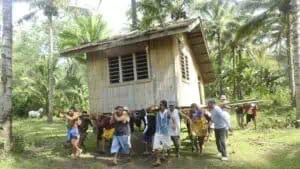
Bayanihan feels inspiring, but in real life it breaks down when no one leads, roles aren’t clear, and follow-through is weak—so nothing gets finished. In this article, Jef Menguin offers a step-by-step guide to start small, organize people, and keep bayanihan going beyond one good day. Read it and share it with your team so you create real impact, not just good vibes.
This piece is part of my series on bayanihan. The Bayanihan hub page tells you the “why.” This page is one of the “hows.” You can practice this in a condo lobby, a subdivision street, a barangay alley, a campus org, or an office team chat.
Bayanihan, in plain English
Bayanihan is when people choose the community over self-interest—showing up to help without being asked, and without expecting anything in return. It’s unity that moves, not unity that gets posted.
And here’s the good news: you don’t need the “perfect community” to do it. You just need a small group willing to start.
Let me show you how it looks on the ground.
The problem isn’t that people don’t care
In Barangay San Roque, the street beside the canal smelled like old rain and old excuses. Everyone complained in the group chat. Everyone had a reason. Nobody had a plan.
Ana worked from home. She wanted the place to feel safer and cleaner, but she also didn’t want to be that neighbor who always “organizes.”
Mang Lito drove a tricycle. He kept saying, “Sige, tutulungan ko,” but he was waiting for someone official to lead.
Lola Nena watched from her window like a quiet judge. She had seen projects die after one selfie.
Then Ana sent one message.
“30 minutes lang. Sunday. 7:30 AM. Tapat ng canal. Bring walis if you have.”
No speech. No shaming. No drama.
Three people showed up.
Then five.
Then ten.
That’s the first lesson: bayanihan doesn’t start with a committee. It starts with a clear invitation people can say yes to.
And yes, this can happen anywhere in the country—because the pattern is the same. People don’t need inspiration. They need a next step.
So here are ten.
1) Start with a 30-minute clean-up
They didn’t clean the whole barangay. They cleaned one corner. One section people pass every day.
Mang Lito arrived late, pretending he was just passing by. He looked at the mess and said, “Grabe. Ganito na naman.”
Ana smiled and handed him gloves. “Kuya, dito na tayo.”
When they finished, the place still wasn’t perfect. But it looked like someone cared. That alone changes how people behave.
You can do this in a coastal town, a city street, a campus walkway, or a subdivision road. The location doesn’t matter. The “one corner” rule does.
2) Make borrowing normal again
The next week, Ana needed a ladder. She was about to order one online.
Then she remembered their new habit: ask first.
“Anyone has a ladder I can borrow for two hours?”
Ate Joy from the sari-sari store replied fast. “Meron. Basta ibalik mo ha.”
Borrowing sounds small, but it trains a community to tell the truth: we don’t need to solve everything alone.
This works anywhere because every place has the same hidden inventory—tools sitting in closets, books on shelves, extra chairs in storage.
3) Plant something you can harvest
Lola Nena didn’t talk much during the clean-up. Then she arrived with cuttings.
“Kangkong grows fast,” she said. “It forgives beginners.”
They used old containers and a small corner beside the gate. No one called it a “project.” They just started planting.
Soon, neighbors who never spoke started swapping tips.
“Dito mo ilagay, mas okay sa araw.”
“Huwag sobrang tubig.”
A community garden can be big, but it doesn’t have to begin big. The beginning is always one pot, one patch, one willing person.
That’s why it can work in Manila, Baguio, Iloilo, Davao—anywhere people can grow something and share it.
4) Run a Skill Swap Sunday
Kuya Ren, the quiet IT guy, finally had his moment.
One afternoon he taught five teens how to make a simple resume. No fancy design. Just clear writing, clear proof, clear contact details.
One kid said, “Kuya, akala ko complicated.”
Kuya Ren laughed. “Hindi. Kailangan mo lang malaman paano ilagay yung totoo.”
This is bayanihan too—sharing what you know so others can stand taller.
Skill swaps work everywhere because every neighborhood has hidden experts: cooks, mechanics, teachers, HR people, nurses, entrepreneurs, students who are good at tech.
You don’t need a speaker. You need a neighbor.
5) Pair the young and the “been there”
After a few weeks, Ana noticed something beautiful.
The teens helped Lola Nena with her phone. Lola Nena helped the teens with life.
Not lecture. Not preaching. Just honest counsel.
“Lola, nahihiya ako mag-apply.”
Lola Nena answered softly, “Mas nakakatakot yung tumanda ka na puro ‘what if.’”
Mentoring doesn’t require a formal program. It requires a safe conversation.
That’s why it can happen in barangays, dorms, offices, churches, and orgs. Anywhere people from different ages cross paths.
6) Practice disaster response before the disaster
One evening, a small quake hit. Not destructive, but enough to shake people awake.
The next Sunday they did something most communities skip: a short drill.
Where to meet.
Who checks on seniors.
Who checks on kids.
What to bring.
No panic. Just clarity.
Preparedness is bayanihan in advance. And in a country like ours, that’s not optional.
Whether you’re in an earthquake zone, a flood-prone area, or a place that gets hit by storms, the practice is the same: prepare together so nobody gets left behind.
7) Give local artists a stage
Ate Joy’s nephew could sing. Nobody knew because nobody gave him a place.
So they held a simple community night. One speaker. A few chairs. A corner where kids could draw.
People laughed. Kids clapped. Neighbors stayed longer than usual.
Culture does something practical. It turns a place from “just where I live” to “where I belong.”
And belonging makes people protect the community more.
8) Build a small savings circle
Then came the real test.
Mang Lito’s tricycle broke down. No income for days.
Normally, that becomes a private crisis people hide. This time, the community had started a tiny savings circle.
Not big money. Just consistent contributions and transparent tracking.
They gave him a small, interest-free loan. No shame. No sermon.
When he got back on the road, Mang Lito told Ana, “Salamat. Akala ko mag-isa ako.”
That line is the reason this works everywhere. Every community has emergencies. Every community needs a way to carry each other.
9) Declare a Bayanihan Day
After a month, they chose one day a month.
One shared project.
One visible fix.
One family to help.
It wasn’t constant. That’s why it lasted.
Consistency beats intensity. A monthly rhythm keeps people involved without burning out.
You can run this as a barangay habit, a school org habit, or even a company volunteer habit. Same idea: one day, one project, one win.
10) Celebrate helpers—out loud
At first, Ana felt awkward doing this.
But she posted a simple note:
“Shoutout to Lola Nena for bringing plants every week. Shoutout to Mang Lito for hauling the heavy stuff. Shoutout to the kids who showed up without being forced.”
No trophies. No long speeches.
Just clear recognition.
A community becomes what it praises. When you praise showing up, people show up.
If you want the simplest way to start
Don’t start with all ten.
Start with one.
Pick something that fits your place.
If you’re in a condo, start with a borrow board or a clean-up.
If you’re in a barangay, start with a Bayanihan Day.
If you’re in a workplace, start with skill swaps and mentoring buddies.
The form changes. The spirit stays.
Bayanihan is not locked to one town or one generation. It’s a repeatable practice—anywhere Filipinos decide to stop waiting and start helping.
24-hour challenge: Message two people today and propose one small action with a time and place. Keep it simple. Keep it real.
Bayanihan begins when someone moves.


If you want Filipino values to show up as real behavior at work…
Let’s turn it into a culture shift experience.
→ Shift Experiences
